


The best technology eventually becomes invisible. | Ambient Computing
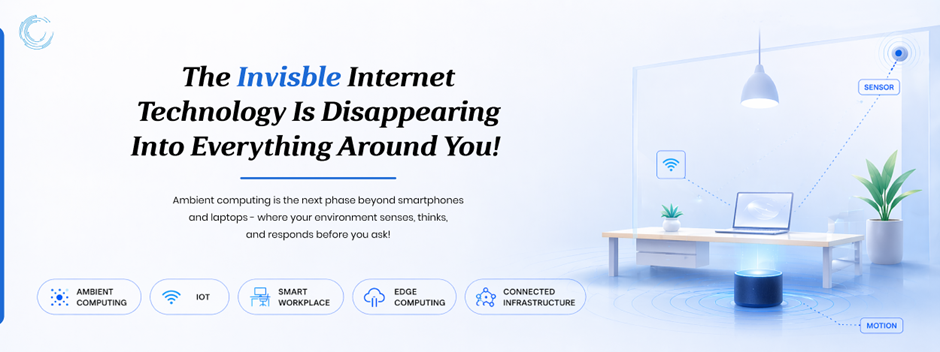
Electricity did not stay a novelty in laboratories. It disappeared into walls, and we stopped thinking about it. The internet did the same — from a thing you “went on” to something that simply surrounds you.
Ambient computing is the next version of that disappearing act. And it is already in your building.
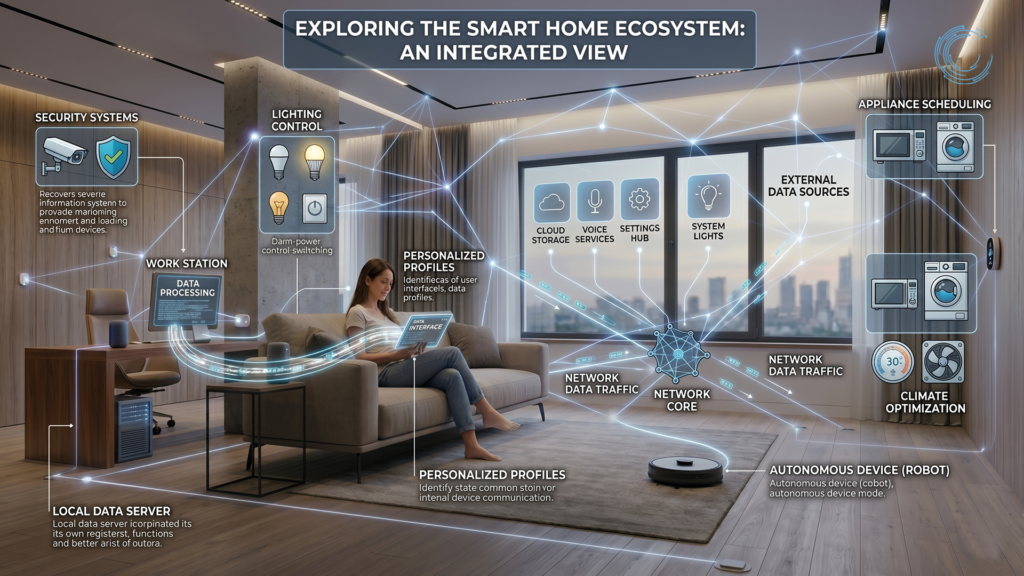
What Ambient Computing Actually Means
Ambient computing is not a product. It is an idea — that technology should work around you rather than require you to work around it.
No screens to unlock. No apps to open. No commands to type. The environment itself senses context, understands what is needed, and responds.
Walk into a meeting room and the right files are already on the screen. Your calendar told the room who was coming. The room did the rest.
That is not science fiction. That is a mid-sized company in 2026 that connected the right systems together.
Where It Is Showing Up Right Now
Workplaces are the most visible. Smart office systems from companies like Microsoft and Cisco now link occupancy sensors, calendars, climate controls, and AV equipment into a single responsive layer. The room adapts to you, not the other way around.
Factories and warehouses are arguably further ahead. Sensors embedded in machinery monitor vibration, temperature, and output in real time. When a pattern suggests a bearing is about to fail, the system flags it before the line goes down. No inspection required. No surprise downtime.
Healthcare environments are using ambient sensing to monitor patients continuously — without wires, without check-ins, without disrupting rest. Vital signs, movement patterns, and room conditions feed quietly into care systems in the background.
In every case, the technology is present but not visible. That is the point.
What This Means for IT Teams
If your infrastructure strategy still treats connectivity as something that lives in devices, ambient computing requires a rethink.
The endpoints are no longer just laptops and phones. They are walls, ceilings, machines, furniture, and air. Managing that requires thinking about data flows differently — what is collected, where it is processed, how it is secured, and who governs it.
The teams getting ahead of this are not waiting for a single platform to solve it. They are building the architecture now — edge computing, unified device management, and clear data governance — so the environment can be trusted when it starts making decisions.
The internet is not going away. It is just going somewhere you cannot see it anymore.
TeamITServe helps enterprises build the connected infrastructure behind ambient experiences — from IoT architecture to edge computing strategy. If your environment is not working for your team yet, let us show you where to start.