


Nobody sold AI to the workforce as a pressure multiplier. | AI burnout algorithm
The pitch was always about relief. Less manual work. Fewer late nights. More time for the thinking that actually matters. And for some teams, that is exactly what happened.
For many others, something different is playing out — and it is worth being honest about it.
When More Capability Becomes More Demand
When a team adopts AI and output doubles, the natural instinct of most organisations is not to reduce the workload. It is to raise the bar.
What used to take a marketing team three days now takes one. So the expectation quietly shifts to three times the content, three times the campaigns, three times the reporting. The tool absorbed the effort. The pressure did not go anywhere — it just moved upstream to the human making the decisions.
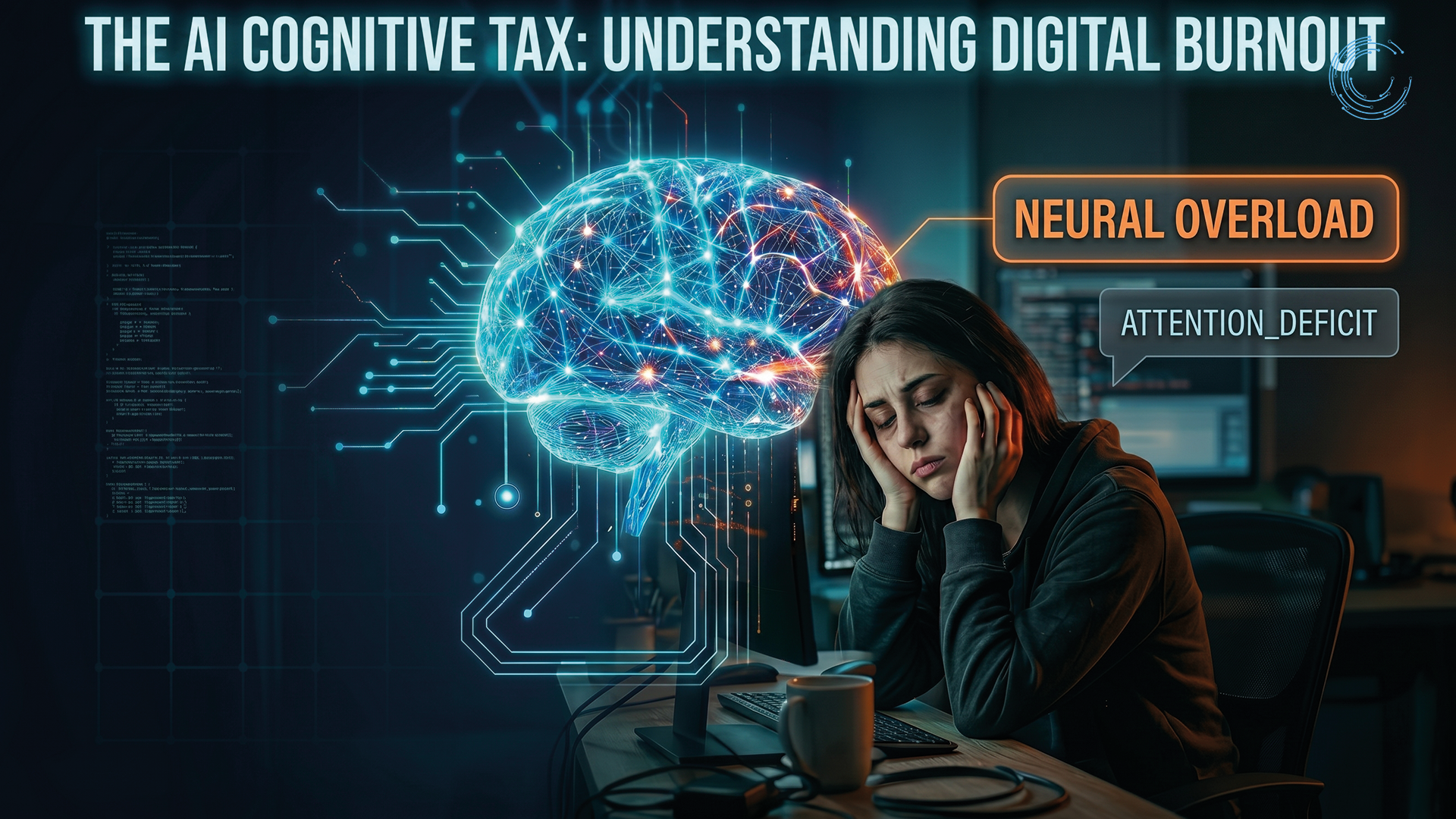
This is the burnout algorithm. AI compresses the time it takes to do work. Leadership fills that time with more work. The person in the middle never actually gets a break.
A 2024 Microsoft workplace survey found that while AI users reported higher productivity, they also reported higher levels of mental fatigue than non-AI users. More output, more exhaustion. The tool was working. The system around it was not.
The Adoption Pattern Nobody Talks About
Most AI rollouts follow the same arc. A tool gets introduced. A few people figure it out. Those people produce more. Everyone else is told to catch up. There is no conversation about what happens to the hours saved — they are simply absorbed by new expectations before anyone notices they existed.
The teams that avoid this trap do one thing differently. They make the time savings visible and then make a deliberate decision about where that time goes. Some of it goes into higher-value work. Some of it — and this is the part most organisations skip — goes back to the people.
What Intentional AI Adoption Actually Looks Like
It starts with a question most leadership teams never ask: what do we want our people to stop doing?
Not what can AI do for us. What should our team never have to do again?
That framing changes the implementation entirely. Instead of AI being layered on top of existing workloads, it starts replacing the parts of work that drain people most — the repetitive reporting, the formatting, the chasing, the administrative weight that fills the day and leaves no room for actual thinking.
Salesforce ran an internal study showing that employees who used AI to eliminate low-value tasks — rather than accelerate existing ones — reported significantly higher job satisfaction and lower attrition intent. Same technology. Different deployment philosophy. Completely different human outcome.
The Decision Every Leader Needs to Make Now
AI is not inherently good or bad for your team. It is a multiplier — and multipliers amplify whatever system they are dropped into.
A healthy, well-structured team with clear priorities will get more focused, more capable, and more resilient with AI. An overloaded team running on tight deadlines and unclear boundaries will get more overloaded, faster.
The technology is not the intervention. The leadership decision about how to deploy it is.
The Bottom Line
The organisations that will look back on this period as transformative are not the ones that moved fastest. They are the ones that moved most intentionally — treating AI adoption as a workforce design decision, not just a technology one.
Your team’s capacity is not infinite. Neither is their tolerance for a system that keeps raising the ceiling every time they reach it.
AI should create breathing room. If it is not, the problem is not the AI.