

Custom AI Models for Healthcare: Revolutionizing Patient Care
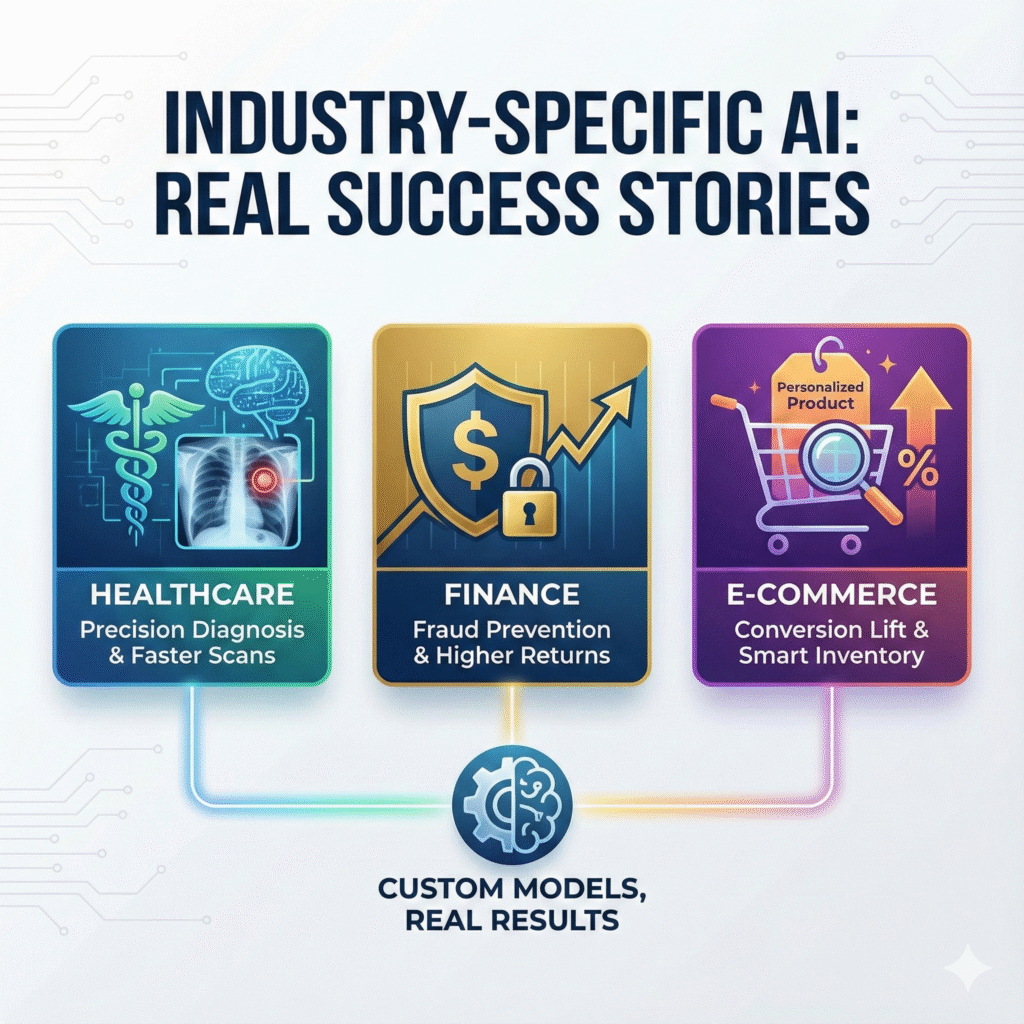
Step inside a bustling hospital ward in 2026, and the revolution is not announced with fanfare—it unfolds quietly in the background, saving lives one precise insight at a time. (Custom AI Models for Healthcare) A routine scan reveals a faint shadow that could easily be overlooked amid hundreds of images.A new treatment protocol adapts seamlessly to a patient’s unique genetic makeup and lifestyle factors.An incoming surge of patients triggers automatic adjustments in staffing and bed assignments, preventing chaos before it starts. This is the quiet power of custom AI models—systems meticulously crafted to navigate the intricate, high-stakes world of healthcare, far beyond what generic tools can achieve. As we progress into 2026, these bespoke AI solutions are evolving from innovative experiments into indispensable allies, delivering safer care, reducing costs, and restoring the human touch in medicine by freeing clinicians from overwhelming data burdens. Here is a closer look at how custom AI is reshaping the landscape of patient care. Detecting Threats Early—Turning Seconds into Saved Lives Radiologists and clinicians face an avalanche of images every day, where fatigue can dull even the sharpest eyes and subtle anomalies can hide in plain sight. One prestigious hospital network developed a deep-learning model drawing from their extensive repository of scans accumulated over more than a decade—incorporating every detailed annotation, confirmed outcome, and even the specific calibration nuances of their imaging equipment. The AI does not presume to make final calls.Instead, it gently highlights: “Pay special attention to this area—it matches patterns associated with early-stage issues.” The outcomes speak volumes: potential cancers identified months ahead of schedule, cardiac risks surfaced before patients experience symptoms, diagnostic errors significantly reduced, and overall survival rates climbing as interventions begin sooner. Crafting Treatments as Unique as Each Patient Traditional medicine often relies on broad protocols that work well on average but fall short for individuals with varying biology, environments, and histories. Custom AI models change that by analysing vast troves of institutional data—genetics, treatment histories, lifestyle details, and even social determinants of health gathered from the provider’s own patient population. Clinicians now receive tailored guidance: “Based on similar cases in our records, this targeted therapy shows an 82% likelihood of success for profiles matching your patient’s—compared to just 61% with the standard approach.” The benefits cascade: fewer ineffective trials leading to unnecessary suffering, optimized dosing to minimize side effects, streamlined resource use, and ultimately healthier patients with lower lifetime healthcare costs. Streamlining Hospital Operations—Efficiency That Enhances Care Hospitals constantly juggle rising demands against finite resources—overcrowded emergency rooms, exhausted staff, and inefficiencies that pull focus away from patients. Advanced predictive models forecast patient flows with remarkable precision, incorporating local health trends, weather impacts, historical admission patterns, and real-time community data. A prominent urban children’s hospital implemented such a system and reduced average emergency wait times by nearly 30%, while optimizing nursing shifts and resource allocation without adding new hires or facilities. The real win? Clinicians reclaim precious hours for direct patient interaction, fostering deeper connections and better healing environments. Bridging the Gap After Discharge—Support That Feels Personal The transition home is often where care plans falter, with patients struggling to manage medications, recognize warning signs, or attend follow-ups amid daily life. Custom virtual assistants, fine-tuned on the provider’s specific protocols and patient communication styles, offer ongoing support through intuitive texts, voice checks, and proactive alerts based on self-reported symptoms. Medication adherence rises markedly.Unnecessary readmissions decline by 18% or more.Patients report feeling truly supported long after leaving the hospital doors, building lasting trust in their care team. Safeguarding the Most Sensitive Asset: Patient Privacy In an era of escalating cyber threats, healthcare data requires fortress-level protection—something generic cloud-based tools often compromise through opaque processing. Custom AI deployments keep all sensitive information within the organization’s secure infrastructure, fully auditable and compliant with the latest regulations. No external black boxes.Complete control over encryption and access.Confidence that patient trust is preserved at every step. A Compelling Case from the Front Lines A large regional health system introduced a sophisticated readmission-risk predictor that sifted through discharge summaries, lab results, social support notes, and follow-up plans. At-risk patients automatically received enhanced outreach—medication reviews, transportation assistance, home visits. The impact was transformative: readmissions decreased by 15–20%, care coordination improved dramatically, millions in costs avoided, and countless families spared the emotional and financial toll of repeat hospitalizations. Looking Toward a Brighter Horizon Custom AI stands firmly as an enhancer of human expertise, not a replacement—equipping doctors and nurses with unprecedented clarity amid overwhelming information. With patient numbers surging and medical knowledge exploding in 2026, the institutions leading the way are those investing in AI that mirrors their unique practices, values, and patient communities. Off-the-shelf options provide a starting point.Truly custom models deliver breakthroughs that redefine what is possible in healing. Because exceptional healthcare is deeply personal.The AI powering it should be too.
Custom AI Models for Healthcare: Revolutionizing Patient Care Read More »